
Rhinoplasty

New Jersey Rhinoplasty:
Enhancing Your Natural Beauty
What is Rhinoplasty? Rhinoplasty, commonly referred to as a “nose job,” is a surgical procedure designed to reshape the nose for aesthetic harmony or to correct functional breathing issues. At Carniol Plastic Surgery in Summit, NJ, Dr. Paul Carniol (Past President of the AAFPRS) and Dr. Eric Carniol specialize in a “Functional-Aesthetic” approach. This ensures that every rhinoplasty not only achieves a refined, natural appearance but also achieves great breathing through expert management of the septum and nasal valves.
Trust Your Care to a Board-Certified Facial Plastic Surgeon
At Carniol Plastic Surgery, we specialize in providing exceptional rhinoplasty services in New Jersey. We understand that each patient’s nose is unique, and the necessity of nose bone-breaking during the procedure varies from person to person. A comprehensive evaluation with Dr. Carniol will determine the best approach for achieving optimal results tailored to your specific needs.
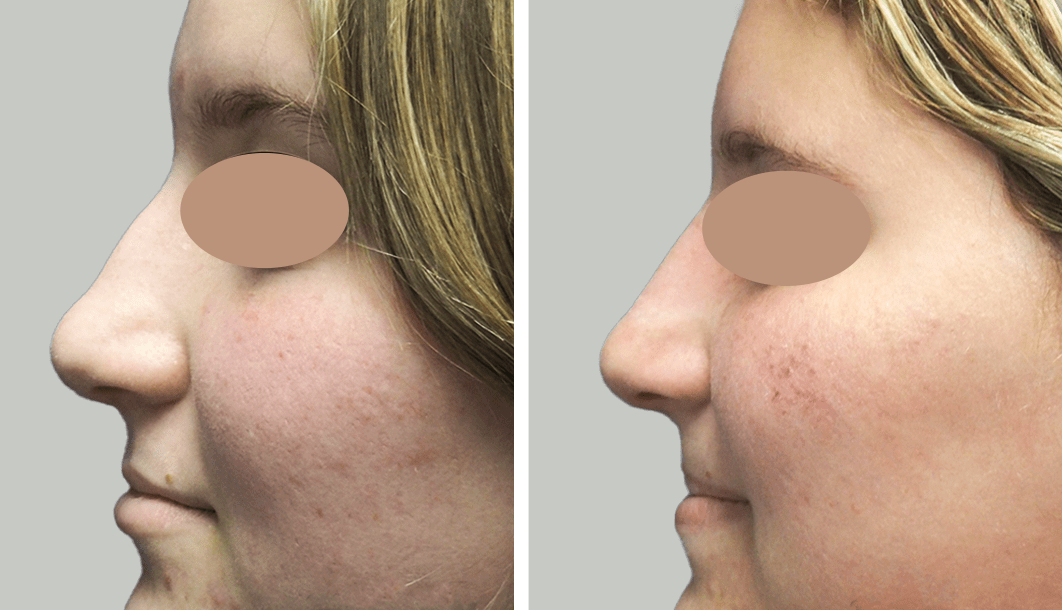
“I can finally breathe through my nose AND I love how it looks. The recovery was much easier than I expected.” — Verified Patient
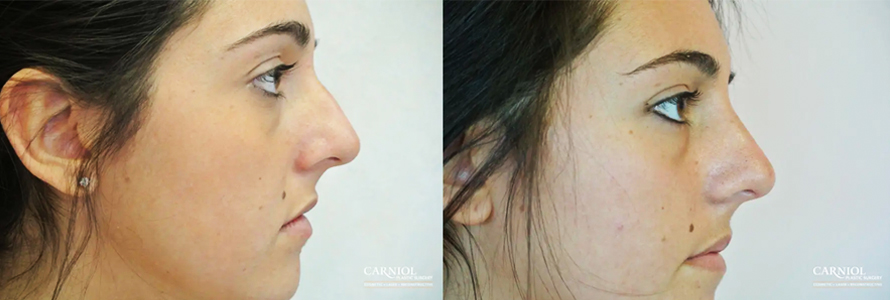
Combining Rhinoplasty with Septoplasty and Chin Implant for Enhanced Results
Want to look better and breathe better? For patients with significant septal deviation causing nasal airway obstruction, rhinoplasty can be combined with septoplasty. This dual procedure not only enhances the aesthetic appearance of the nose but also helps reduce symptoms related to nasal airway obstruction.
Dr. Eric Carniol also performs chin implant surgery (mentoplasty). A chin implant can improve facial balance. Rhinoplasty is performed as “outpatient” surgery, meaning that you go home the same day, and there is no need for post-surgery packing. As a result, there is usually only mild swelling and discomfort experienced by our patients.
Preparing for Your Rhinoplasty
Dr. Carniol recommends certain precautions before your rhinoplasty surgery to ensure the best possible outcome. It is advised to stop taking aspirin, vitamin E, or fish oil for at least two weeks before the surgery. No alcohol for 1 week before surgery to decrease bruising after surgery. Staying well-hydrated and maintaining a balanced diet in the days leading up to surgery can also facilitate a smoother recovery period.
Recovery and Aftercare Following Rhinoplasty
Recovery after rhinoplasty varies from person to person. It is common to experience some swelling and bruising around the eyes, but the majority of our patients only experience mild swelling and bruising. To decrease bruising and swelling, Dr. Carniol recommends cool compresses for the face, sleeping elevated, a diet rich in bromelain, and rinsing the nose with saline.
Most patients experience only mild discomfort following the surgery, and patients rarely take narcotic pain medication. With Dr. Carniol’s anesthesia technique, patients rarely have nausea after surgery.
Rhinoplasty Expertise and Academic Authority
At Carniol Plastic Surgery, our rhinoplasty philosophy is grounded in decades of academic leadership and clinical innovation. It is paramount for the balance of “Functional-Aesthetic Harmony.”
Our surgeons don’t just perform rhinoplasty; they teach it. Dr. Paul Carniol, Past President of the AAFPRS, has edited seven definitive surgical textbooks, including Complications in Minimally Invasive Facial Rejuvenation, while Dr. Eric Carniol has written articles and book chapters on rhinoplasty. He also was recognized with the Wilfred Goodman Award for his research in facial plastic surgery.
- Surgeon Expertise – Double Board-Certified Facial Plastic Surgeons
- Specialization – Primary, Revision, and Functional (Septoplasty and Nasal Valve Repair)
- Technique Focus – Structural integrity & breathing preservation
- Anesthesia – Specialized techniques to minimize post-op nausea
- Recovery – No nasal packing; most patients return to work in 7 days. No narcotics.
- Philosophy – Natural results, no ski slopes
- Insurance Coverage? – Insurance will cover functional part of surgery such as septoplasty or nasal valve repair, which saves patients money when they want a cosmetic rhinoplasty.
How long is the recovery for a rhinoplasty?
Most patients return to work or school within 7 to 10 days following a rhinoplasty. While major swelling and bruising typically subside after the first two weeks, 70% goes down in about 6 weeks, and the remaining 30% can take up to one full year for the final nasal contours to settle and for all residual internal swelling to resolve completely.
Is rhinoplasty a painful procedure?
Rhinoplasty is generally described as uncomfortable rather than painful. Most patients experience a sensation of nasal “fullness” or congestion, similar to a cold, rather than sharp pain. At Carniol Plastic Surgery, we utilize specialized long-acting local anesthetics and advanced surgical techniques to minimize post-operative discomfort without needing narcotic pain medication.
Does Dr. Carniol use nasal packing after surgery?
No, Dr. Carniol does not typically use traditional nasal packing. Instead, we use internal “splints” or specialized suturing techniques that allow for better airflow and a much more comfortable recovery experience. This approach significantly reduces the pressure and “stuffiness” often associated with older nasal surgery methods.
Can a rhinoplasty fix my breathing issues?
Yes, a rhinoplasty can be combined with a septoplasty, turbinate reduction, or nasal valve repair to correct functional breathing issues caused by a deviated septum or enlarged turbinates. This combined procedure, often called a functional rhinoplasty, ensures that the nose not only looks better but functions optimally for airflow.
Will insurance cover the cost of a rhinoplasty?
Insurance typically covers the functional portion of the surgery—such as a septoplasty to correct a deviated septum if it is deemed medically necessary. However, the cosmetic portion of the procedure (refining the shape or size of the nose) is considered elective and is not covered by insurance. Our office provides a detailed breakdown of these costs during your consultation.